Table of Contents
- Rollstock Film Specifications: The Essential Starting Point
- What Must the Filling Machine and Product Team Confirm?
- VFFS and HFFS Are Not Interchangeable Specifications
- Specification Table: Required Fields, Units, and Confirmation Sources
- Web Width, Repeat Pitch, Eye Marks, and Unwind Direction
- Core Size, Roll Diameter, Roll Weight, and Handling Limits
- How Do Friction and the Sealing Window Affect Performance?
- How to Approve Artwork and Trial Rollstock in Five Steps
- Frequently Asked Questions
- Conclusion: Approve the Machine-Specific Specification
- Discuss Your Packaging Specification With QINPACK
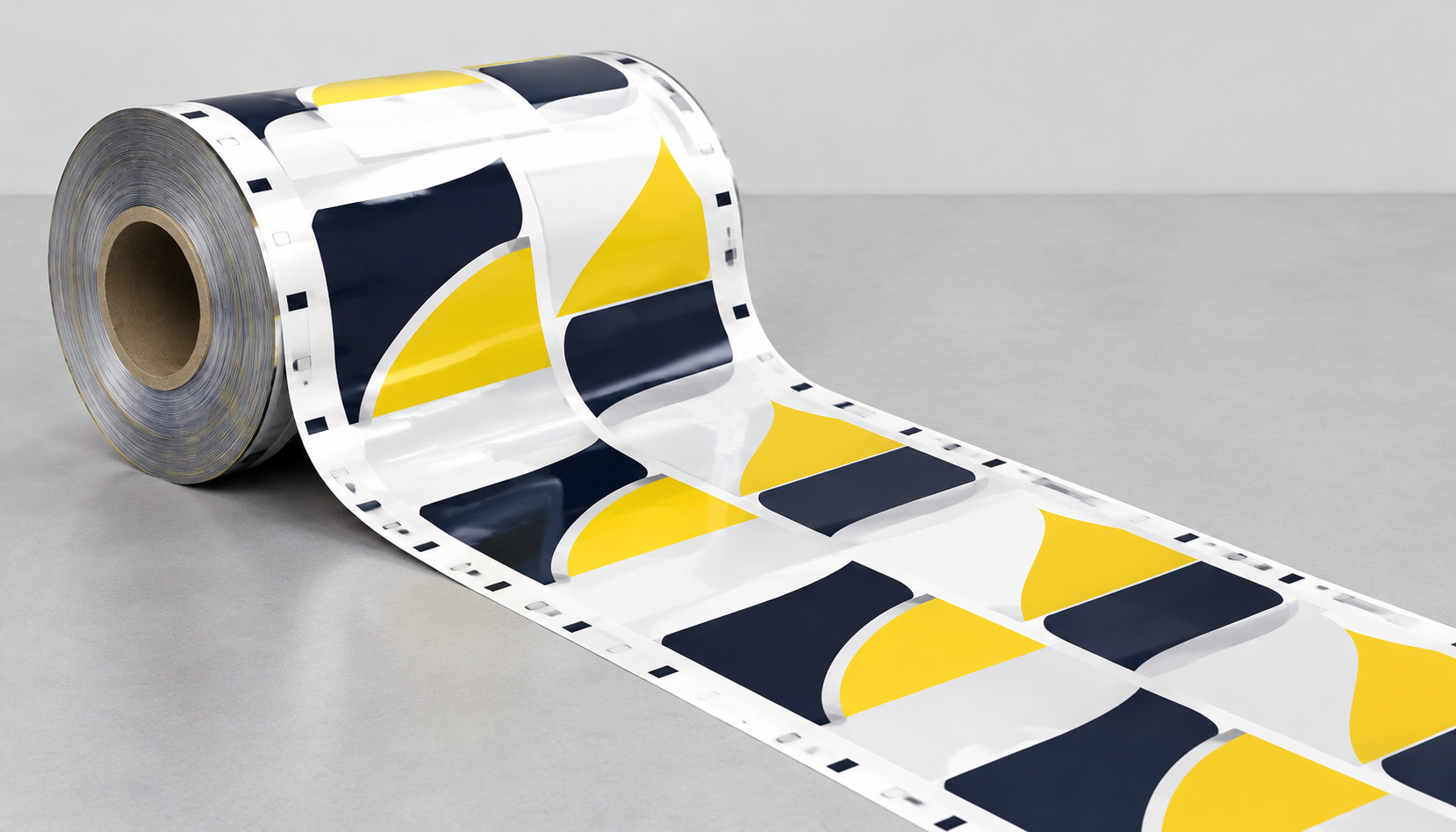
Rollstock film specifications must connect the product and package design to the filling machine’s web geometry, reel limits, registration system, and sealing conditions. Before requesting a supplier quote, assemble a machine-specific specification with agreed tolerances and a plan for validating trial film.
Table of Contents
Rollstock Film Specifications: The Essential Starting Point
A quote-ready specification needs the machine identity, package layout, product conditions, film construction, web dimensions, reel limits, print orientation, and trial acceptance criteria. Material name and thickness alone are insufficient.
- Rollstock
- Continuous flexible packaging film supplied on a reel for downstream forming, filling, and sealing. It is not a shipment of finished individual pouches.
- Form-fill-seal (FFS)
- A process in which equipment forms packaging from film, introduces the product, and seals the package.
QINPACK’s custom printed rollstock page provides the commercial starting point; this checklist addresses the machine-interface details needed for an RFQ.
What Must the Filling Machine and Product Team Confirm?
The contract packer should confirm machine limits with the equipment manufacturer and product requirements with the brand’s technical team. Assign an owner to each unresolved field before asking suppliers to finalize a quote.
- Product: contents, fill weight or volume, oil content, moisture sensitivity, and particles or powder that may enter the seal area.
- Operating conditions: product temperature, filling method, gas flushing if used, and planned speed in packages/min or web speed in m/min.
- Package: finished dimensions, seal arrangement, lanes, and any tear feature, zipper, or perforation requiring compatible tooling.
- Distribution: intended storage temperature, humidity exposure, transport conditions, and shelf-life objectives requiring product-specific validation.
For US food applications, request relevant food-contact declarations and supporting reports for the proposed construction and intended use. A cleanroom classification does not establish finished-pack compliance or sterility.
VFFS and HFFS Are Not Interchangeable Specifications
VFFS film requirements and HFFS rollstock requirements depend on the actual forming path, sealing arrangement, and tooling, not just the machine category.
- Vertical form-fill-seal (VFFS)
- Equipment commonly forms film around a vertical tube, fills through that tube, and makes longitudinal and transverse seals.
- Horizontal form-fill-seal (HFFS)
- Equipment forms, fills, and seals packages along a horizontally arranged path. Horizontal flow wrappers and horizontal pouch-forming machines can require different layouts.
For example, dry granules filled through a VFFS tube and a solid snack carried through a horizontal flow wrapper create different forming and product-handling demands. These are illustrative applications, not universal machine assignments.
| Requested item | What is supplied | Critical confirmation |
|---|---|---|
| VFFS rollstock | Continuous film web | Forming tube, draw length, longitudinal seal, and cross-seal layout |
| HFFS rollstock | Continuous film web | Flow-wrap or pouch-forming configuration, fold path, and seal arrangement |
| Converted pillow pouches | Individual formed packs, rather than continuous film | Whether the filling operation actually accepts preformed packs |
| Rollstock for stick packs | Film prepared for the specified lane and slitting arrangement | Master-web or slit-reel requirements, lane pitch, and tooling |
A stick pack is a finished narrow package; its name alone does not specify the film web needed to produce it.
Specification Table: Required Fields, Units, and Confirmation Sources
Use this rollstock RFQ checklist as a controlled specification. Record nominal values, tolerances, revision numbers, and confirmation sources; label unresolved fields rather than treating estimates as approved limits.
| Field | Units or required description | Confirmation source |
|---|---|---|
| Machine and package | Make, model, tooling, format, seal arrangement, drawing revision | Equipment manufacturer and contract packer |
| Product and contact conditions | Product; g/kg or oz/lb; mL/L or US fl oz; temperatures in degrees C or F | Product and filling teams |
| Film construction and thickness | Layer sequence, sealant side, finish; micrometers or mils with tolerance | Supplier proposal and buyer approval |
| Barrier, when required | Oxygen transmission rate (OTR): cm³/(m²·day); water vapor transmission rate (WVTR): g/(m²·day); test method and conditions | Product team and construction-specific testing |
| Web width | mm or inches, including tolerance | Approved machine drawing |
| Repeat pitch and lanes | mm or inches; lane count, layout, and relationship to cut pitch | Tooling layout and artwork approval |
| Registration eye marks | Size and coordinates in mm or inches; color, contrast, and clear area | Sensor requirements and machine drawing |
| Unwind and orientation | Annotated diagram showing feed direction, printed side, sealant side, and artwork orientation | Contract packer and supplier sign-off |
| Core | Inside diameter and width in mm or inches; material and required construction | Reel shaft or chuck specification |
| Roll limits | Maximum outside diameter in mm or inches; maximum gross weight in kg or lb | Unwinder and handling equipment limits |
| Coefficient of friction | Dimensionless static/kinetic results; contact pair, method, conditioning, and test conditions | Agreed testing and machine trial |
| Sealing requirements | Temperature in degrees C or F; dwell in s or ms; jaw pressure in kPa/psi or force in N, as applicable | Sealing equipment data and trial results |
| Printing and quantity | Digital or gravure; artwork revision; quantity per SKU; usable length in m/ft and roll count | Procurement and supplier confirmation |
| Splices and packing | Permitted count, splice construction and identification, winding requirements, protective packing | Contract packer and supplier agreement |
One mil equals 25.4 micrometers. For barrier results, specify temperature, humidity conditions or gradient, and oxygen pressure conditions where relevant. Film barrier data alone do not establish the packaged product’s shelf life.
Web Width, Repeat Pitch, Eye Marks, and Unwind Direction

Confirm film unwind direction and print orientation with an annotated machine-specific reference, not a supplier’s generic unwind number alone. Numbering conventions can differ between suppliers.
Web width is the edge-to-edge width of the flat film. Repeat pitch is the distance along the web between corresponding points in successive artwork repeats. A repeat may contain multiple packages, so it is not automatically the finished package length.
The approved reference should show roll rotation as viewed from a named side, web travel, leading artwork edge, printed and sealant surfaces, lane arrangement, cut lines, and seal areas. Identify whether the machine makes a fin seal, joining inner surfaces, or a lap seal, joining inner and outer surfaces; this affects the required sealable surfaces.
Specify registration eye marks against the sensor position, including dimensions, contrast, spacing, and clearance from nearby graphics. Use packaging artwork dielines to coordinate the layout, then obtain the contract packer’s mechanical approval before printing.
Core Size, Roll Diameter, Roll Weight, and Handling Limits
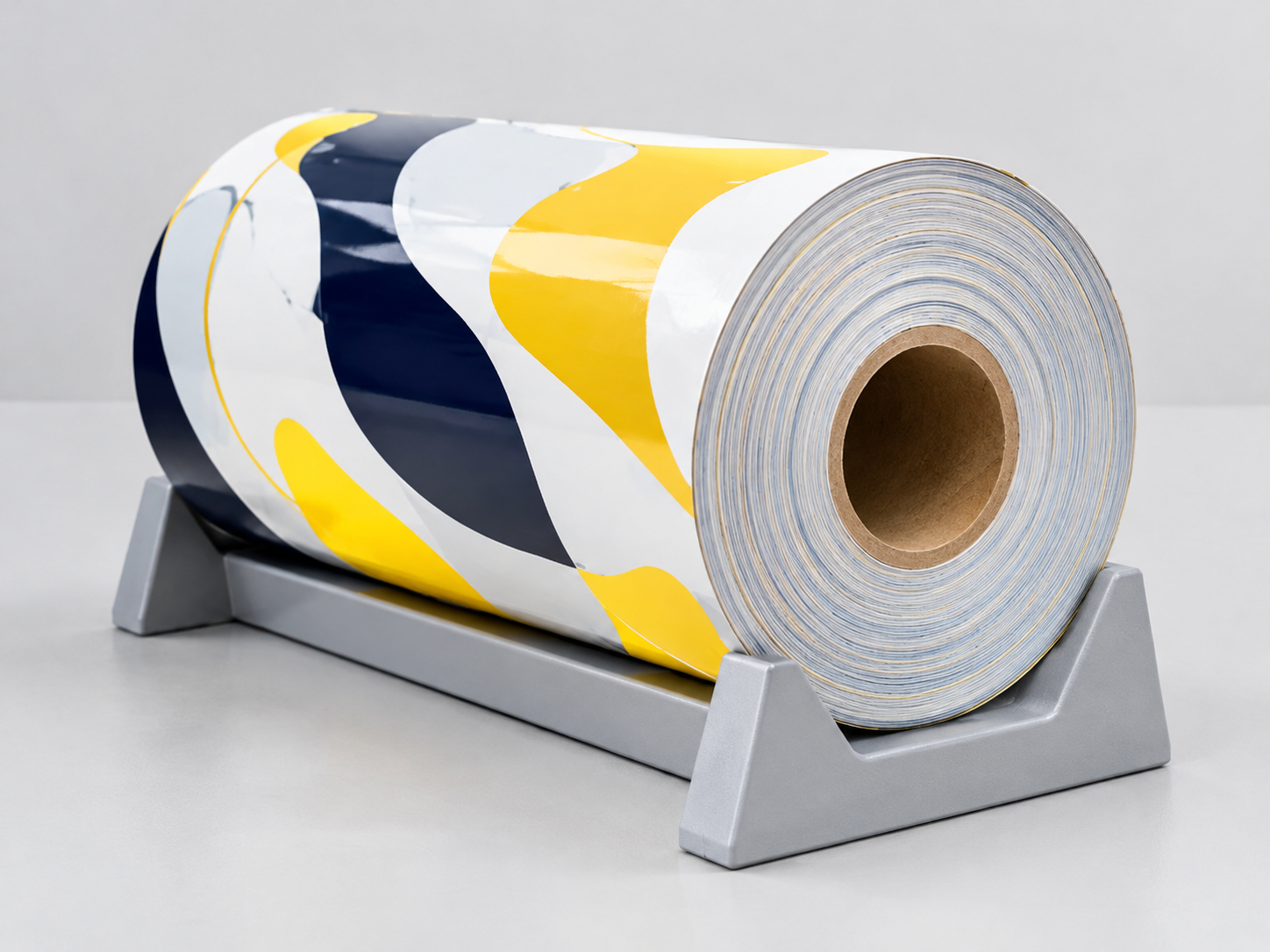
Approve core fit, roll outside diameter, and gross roll weight separately. A reel can fit the shaft but exceed the unwinder’s diameter or handling limit.
Core inside diameter (ID) is the bore that fits the shaft or chuck. Roll outside diameter (OD) is the diameter across the wound film. Record both in mm or inches and roll weight in kg or lb, stating whether weight includes the core.
Agree on usable web length, winding firmness, edge alignment, splice identification, and protection during transport. Telescoping, where layers shift sideways, can interfere with tracking. Include reel lifting and loading limits, plus storage and conditioning instructions appropriate to the agreed construction. Do not substitute an estimated roll length for an approved diameter or weight limit.
How Do Friction and the Sealing Window Affect Performance?
Friction affects how film slides and grips; the sealing window determines which operating settings produce acceptable seals. Both require machine-specific validation rather than universal targets.
Film coefficient of friction (COF) is a dimensionless ratio describing resistance to sliding between specified surfaces. Static COF concerns starting movement; kinetic COF concerns continued sliding. Excessive drag can disrupt forming, while insufficient traction can contribute to slipping.
Request the test method, film-to-film or film-to-metal contact pair, tested sides, temperature, relative humidity, conditioning time, test speed, and sample age. These results are not interchangeable. Surface treatments and slip additives can affect behavior over time, so evaluate film in its intended condition.
The sealing window is the range of temperature, dwell time, pressure or force, and cooling conditions that meets agreed seal criteria for the particular construction and machine. A jaw temperature setpoint is not necessarily the temperature at the film interface. Machine speed changes available sealing time.
Check seal strength and integrity using agreed methods and acceptance limits. Where relevant, evaluate hot tack, meaning seal strength shortly after sealing and before full cooling, plus product contamination in the seal area. QINPACK’s quality and inspection information describes its approach; request project-specific methods and results rather than treating that page as a trial report.
How to Approve Artwork and Trial Rollstock in Five Steps
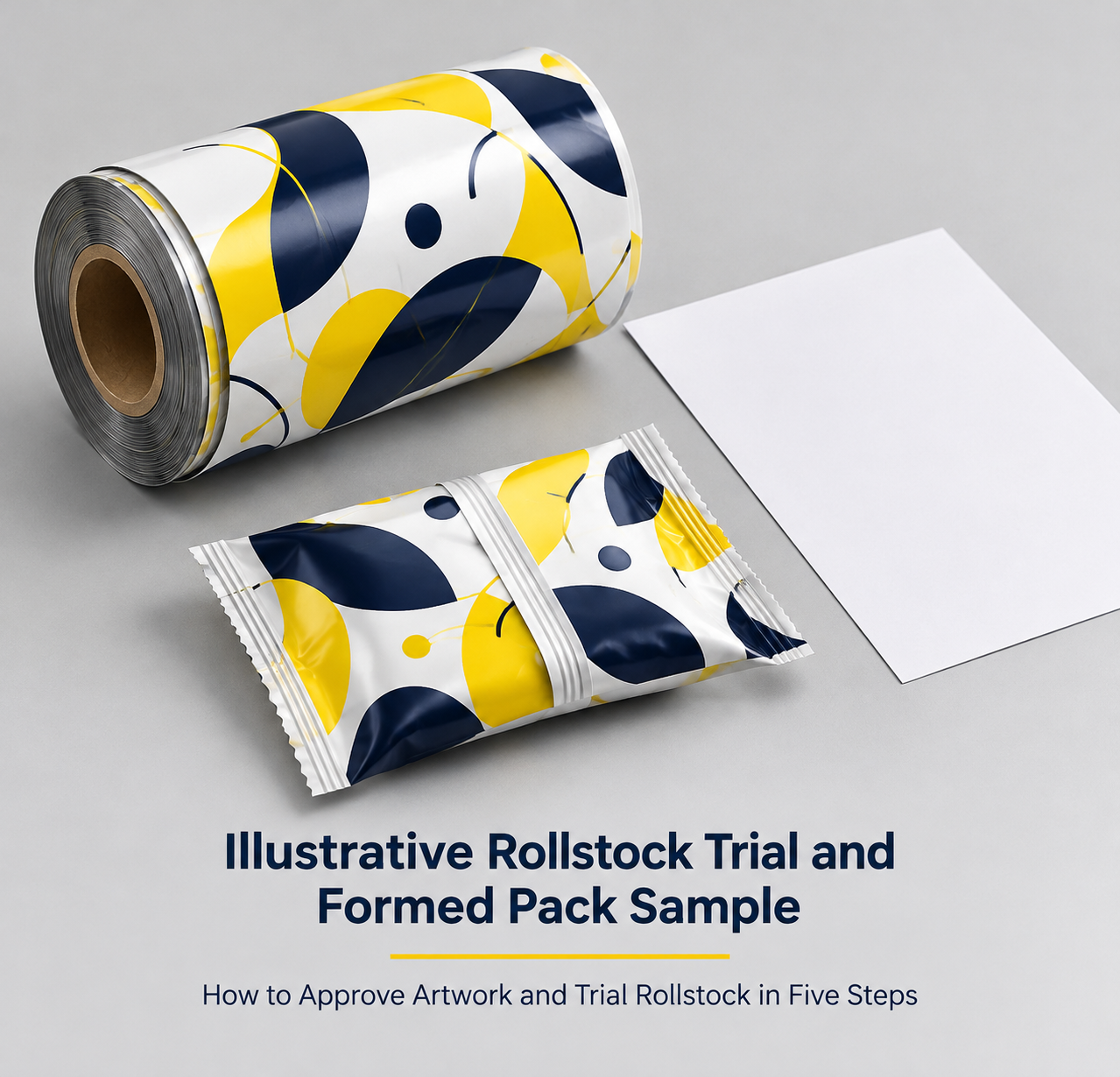
Before releasing production, approve the mechanical layout, artwork, construction, reel specification, and measured trial results together. Artwork approval alone does not demonstrate machine compatibility.
- Freeze the machine drawing. Confirm tooling, web width, repeat, lanes, seals, eye marks, reel limits, and unwind reference. Assign a revision number.
- Approve artwork against that drawing. Check orientation, cut positions, mark clearance, seal zones, and any variable-code area. Review color expectations separately from mechanical fit.
- Agree on the trial supply. Specify construction, printing route, usable trial length, roll count, and acceptance criteria. QINPACK publishes digital and rotogravure printing options; confirm suitability and minimums for this rollstock project. Compare setup requirements, artwork changes, run length, and quantity per SKU.
- Run the agreed protocol. Use representative product and approved operating conditions. Record settings, tracking, registration, forming behavior, seal test results, rejects, and identified causes. Evaluate the intended operating range, not only one convenient setting.
- Release a signed specification. Attach the approved artwork, structure, reel details, unwind reference, and trial report. Document deviations and define which later changes require review or another trial.
If trial material differs from the proposed production construction or printing route, document the difference and determine what additional validation is necessary.
Frequently Asked Questions
- Which rollstock specifications are needed before requesting a quote?
Provide the machine make and model, product and fill amount, package drawing, proposed construction, web width, repeat pitch, eye marks, unwind reference, reel limits, quantity per SKU, and artwork. Identify missing values explicitly and agree on trial acceptance criteria before ordering trial material.
- Can VFFS and HFFS machines use the same rollstock?
Possibly, but machine category alone does not establish compatibility. The construction, width, repeat, forming path, sealable surfaces, friction, and reel limits must suit each machine. Approval on one line should not automatically transfer to another.
- How should film unwind direction and print orientation be confirmed?
Approve an annotated reference showing the viewing side, roll rotation, web travel, leading artwork edge, printed surface, sealant surface, and eye-mark position. Cross-check any supplier unwind number against this reference rather than assuming numbering conventions match.
- Why do COF and the sealing window matter during a machine trial?
COF influences sliding and traction during web handling. The sealing window identifies settings that meet agreed seal criteria at the intended speed and product conditions. Test results require stated methods and conditions; neither property has one universal target for all lines.
- What should be approved before moving to a production order?
Approve the revised machine layout, artwork, construction, reel and unwind specifications, and documented trial results against agreed acceptance limits. Resolve deviations and identify changes that require renewed validation. A visually acceptable pack is not enough to establish seal performance or shelf life.
Conclusion: Approve the Machine-Specific Specification
A useful rollstock specification is a shared approval document, not a list of generic film properties. It connects supplier output to the contract packer’s machine and the product’s validated requirements.
FAQ
Which rollstock specifications are needed before requesting a quote?
Provide the machine make and model, product and fill amount, package drawing, proposed construction, web width, repeat pitch, eye marks, unwind reference, reel limits, quantity per SKU, and artwork. Identify missing values explicitly and agree on trial acceptance criteria before ordering trial material.
Can VFFS and HFFS machines use the same rollstock?
Possibly, but machine category alone does not establish compatibility. The construction, width, repeat, forming path, sealable surfaces, friction, and reel limits must suit each machine. Approval on one line should not automatically transfer to another.
How should film unwind direction and print orientation be confirmed?
Approve an annotated reference showing the viewing side, roll rotation, web travel, leading artwork edge, printed surface, sealant surface, and eye-mark position. Cross-check any supplier unwind number against this reference rather than assuming numbering conventions match.
Why do COF and the sealing window matter during a machine trial?
COF influences sliding and traction during web handling. The sealing window identifies settings that meet agreed seal criteria at the intended speed and product conditions. Test results require stated methods and conditions; neither property has one universal target for all lines.
What should be approved before moving to a production order?
Approve the revised machine layout, artwork, construction, reel and unwind specifications, and documented trial results against agreed acceptance limits. Resolve deviations and identify changes that require renewed validation. A visually acceptable pack is not enough to establish seal performance or shelf life.
Discuss Your Packaging Specification With QINPACK
Send your machine make and model, product type, fill weight or volume, package format and dimensions, filling and storage conditions, web layout, reel specifications, quantity per SKU, artwork and printing requirements, closure needs if applicable, destination, and available trial results. QINPACK can discuss a proposed structure, printing route, and project-specific factory quote.
Ask about a dieline consultation or suitable trial samples. Confirm sample contents, eligibility, freight charges, quote response timing, and production schedules with the team. Stock samples and custom artwork proofs or prototypes are separate requests; generic samples do not replace a machine trial.
Have Questions About This Packaging Specification?
Send your required barrier barrier properties, filling temperature, or bag dimensions to our Guangzhou prepress engineering team for a formal technical consultation.