Table of Contents
- Table of Contents
- Spout Pouch Filling Methods: The Short Decision
- How Do the Two Filling Routes Work?
- Filling Through the Spout Before Applying the Cap
- Filling Through an Open Top Before Heat Sealing
- Comparison Table: Filling Access, Closures, and Validation
- Which Product and Equipment Details Control the Choice?
- Viscosity, Particulates, Foam, and Seal Contamination
- When Does the Process Require a Different Pouch Construction?
- How to Approve the Pouch and Filling Route in Five Steps
- Frequently Asked Questions
- Conclusion: Specify the Filling Route Before Ordering
- Discuss Your Packaging Specification With QINPACK
The right spout pouch filling method depends on how the product reaches the pouch, where the final seal is made, and what the filling equipment can control. Fill-through-spout pouches and open-top pouch filling can both work for pourable products, but they require different fitment interfaces, pouch supply conditions, contamination controls, and validation plans.
Table of Contents
Spout Pouch Filling Methods: The Short Decision
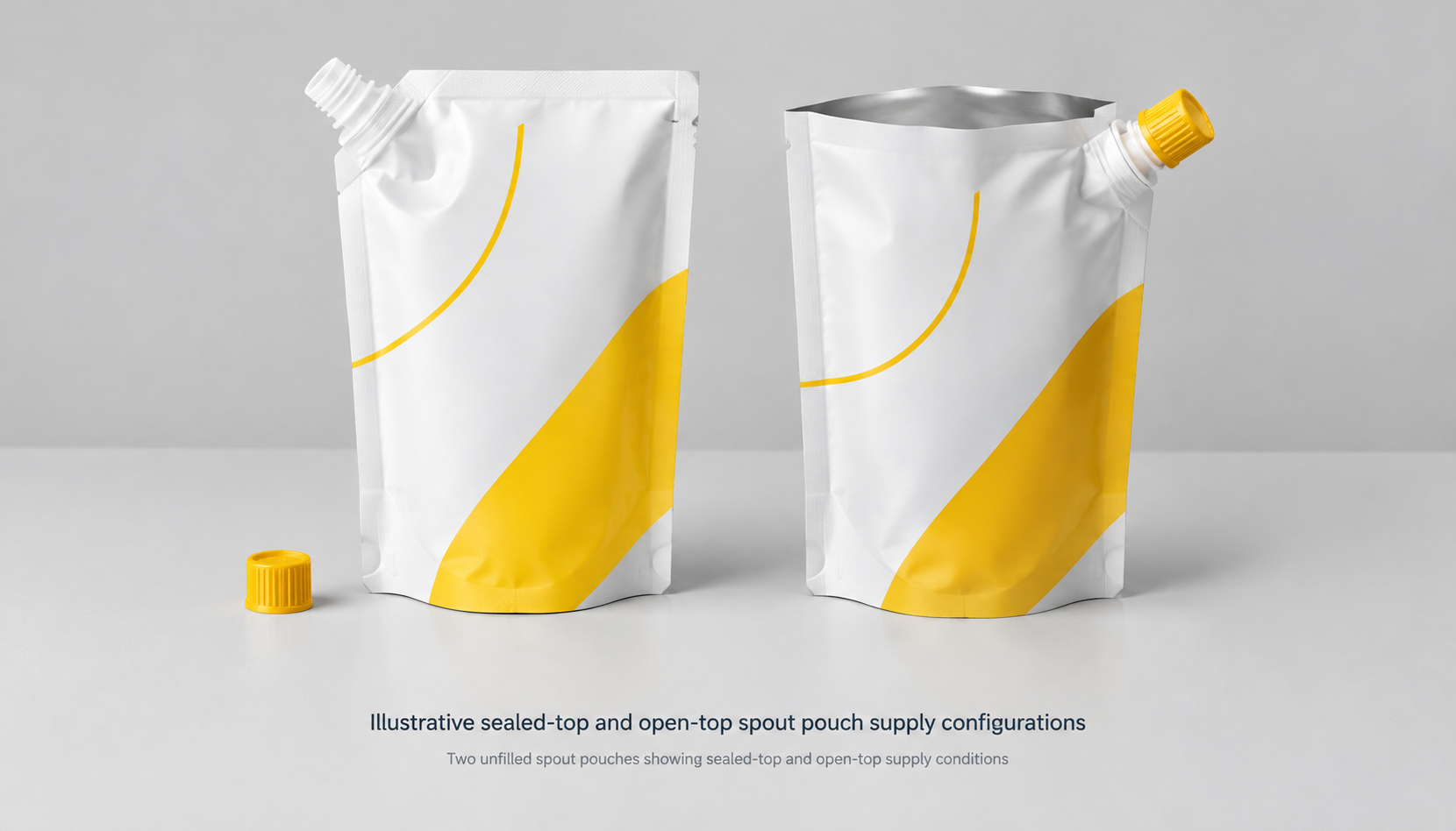
Short answer: choose fill-through-spout pouches when the filling line is designed to meter product through the installed fitment and close it with a cap. Choose open-top pouch filling when the line needs a wider top opening for filling, headspace control, inspection, or product handling before the pouch is heat sealed.
Definition: A fitment is the welded plastic component that creates the pouch opening, neck, thread, or dispensing interface. The spout is the fitment feature used for filling or dispensing. It is separate from the standing structure, such as a bottom gusset, that allows a pouch to stand upright.
For a smooth sauce, beverage concentrate, or household refill, the practical choice is controlled by product flow, nozzle access, required fill volume, equipment changeover, and the risk of product reaching a seal surface. The pouch appearance alone does not determine the route.
Start with the relevant spout pouch packaging options for the format, then confirm the fitment, cap, body dimensions, laminate, filling route, and application conditions as one system.
How Do the Two Filling Routes Work?
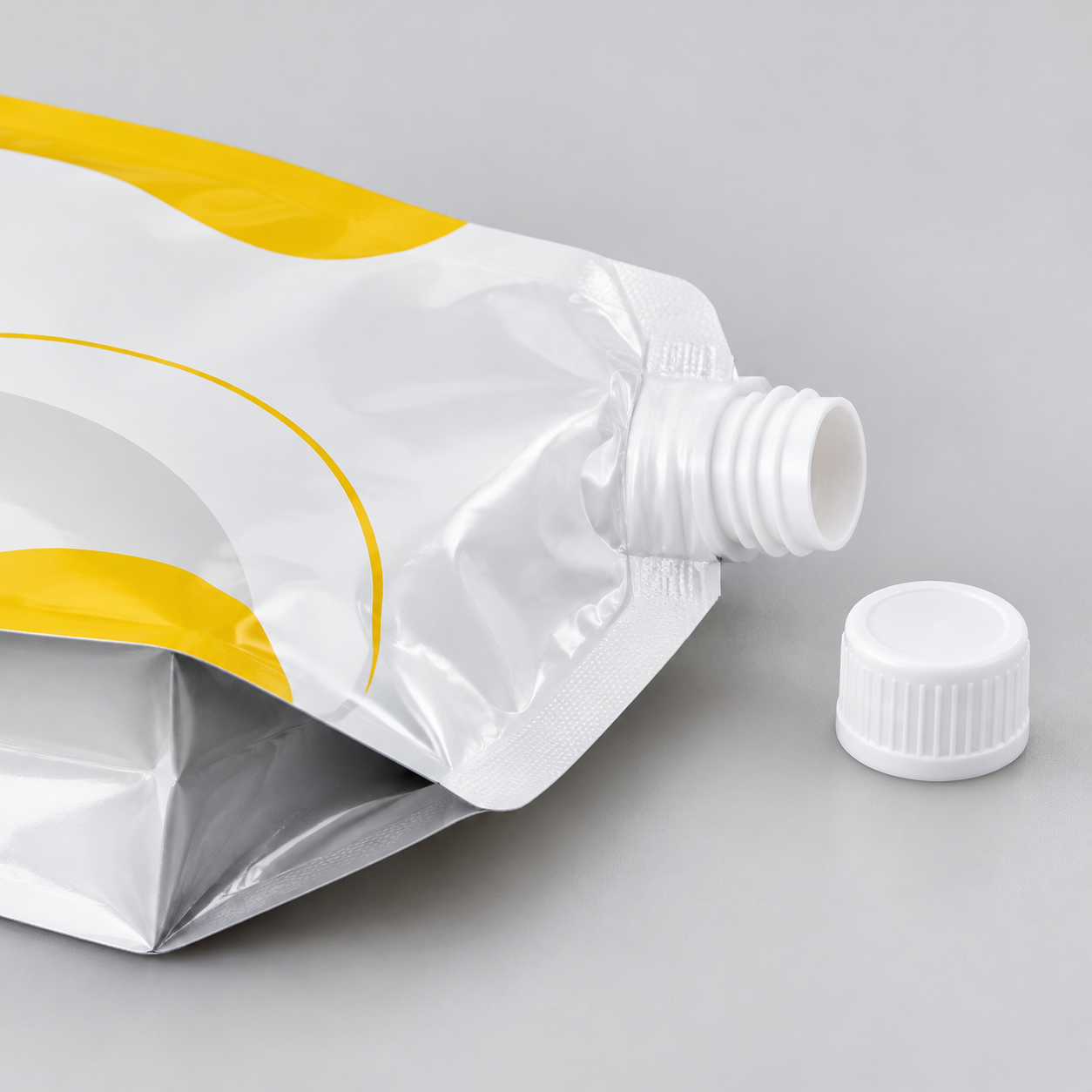
The difference between the two routes is the filling access and the location of the final closure. In one route, the product passes through the fitment. In the other, the product enters through a temporary open top and the top seal becomes part of the finished package.
Filling Through the Spout Before Applying the Cap
With fill-through-spout pouches, the fitment is normally installed in the pouch before filling. The line removes or leaves off the cap, positions a filling nozzle at the spout opening, meters the product, manages headspace, and applies or tightens the cap. The exact sequence depends on the cap design and the filler.
This route keeps the top edge of the pouch out of the filling path, which can simplify final sealing when the fitment and nozzle are well matched. It also places more responsibility on the spout opening, internal diameter, thread, cap seal, weld flange, nozzle clearance, and filling speed. A narrow or poorly matched opening can restrict a viscous product, trap particulates, increase foaming, or slow the line.
Confirm whether the equipment fills through the open neck, requires a specific cap-removal step, needs venting, or applies a defined cap torque. A cap that fits the thread is not automatically a validated seal for the product or distribution conditions.
Filling Through an Open Top Before Heat Sealing
With open-top pouch filling, the pouch is supplied with a top opening that accepts the filling nozzle or product feed. The spout may already be welded below the intended top-seal area, or the final design may use a different closure arrangement. After filling, the line controls headspace, removes or settles foam as needed, wipes or protects the seal zone, and heat seals the top.
The wider opening can support products that need more filling clearance, manual or semi-automatic loading, visual inspection, or a filling nozzle that cannot pass through the spout. It can also make contamination control more demanding. Product on the inner seal layer, top edge, or sealing jaws can reduce seal quality, create channels, or lead to leakage during handling.
Open-top filling therefore requires a defined seal width, temperature, pressure, dwell time, pouch presentation, and product-clearance method. Those settings must be established on the actual pouch construction and equipment rather than copied from a different film or format.
Comparison Table: Filling Access, Closures, and Validation
The following comparison is a specification starting point, not a substitute for line trials. The final responsibility is shared by the pouch supplier, filling-equipment supplier, brand owner, and contract packer.
| Decision area | Fill-through-spout pouches | Open-top pouch filling |
|---|---|---|
| Pouch supply condition | Fitment is typically installed; cap may be supplied separately or removed for filling. | Top remains open for filling; spout placement and final top-seal design must be defined. |
| Filling access | Product enters through the spout opening and must match the nozzle and neck. | Product enters through the open top, which can provide more clearance. |
| Final closure | Cap application and cap-seal performance are central to closure control. | Heat sealing the top is central; the spout cap remains a separate closure interface. |
| Main contamination concern | Product contact with the spout neck, thread, cap seal, or weld area. | Product, foam, or residue on the top seal layer or sealing jaws. |
| Equipment interface | Nozzle diameter, insertion depth, venting, cap handling, and torque. | Opening width, pouch presentation, top-seal tooling, wiping, and headspace control. |
| Validation responsibility | Confirm fitment welds, cap sealing, leakage, filling rate, and product compatibility. | Confirm top-seal strength, seal cleanliness, leakage, filling rate, and product compatibility. |
Which Product and Equipment Details Control the Choice?
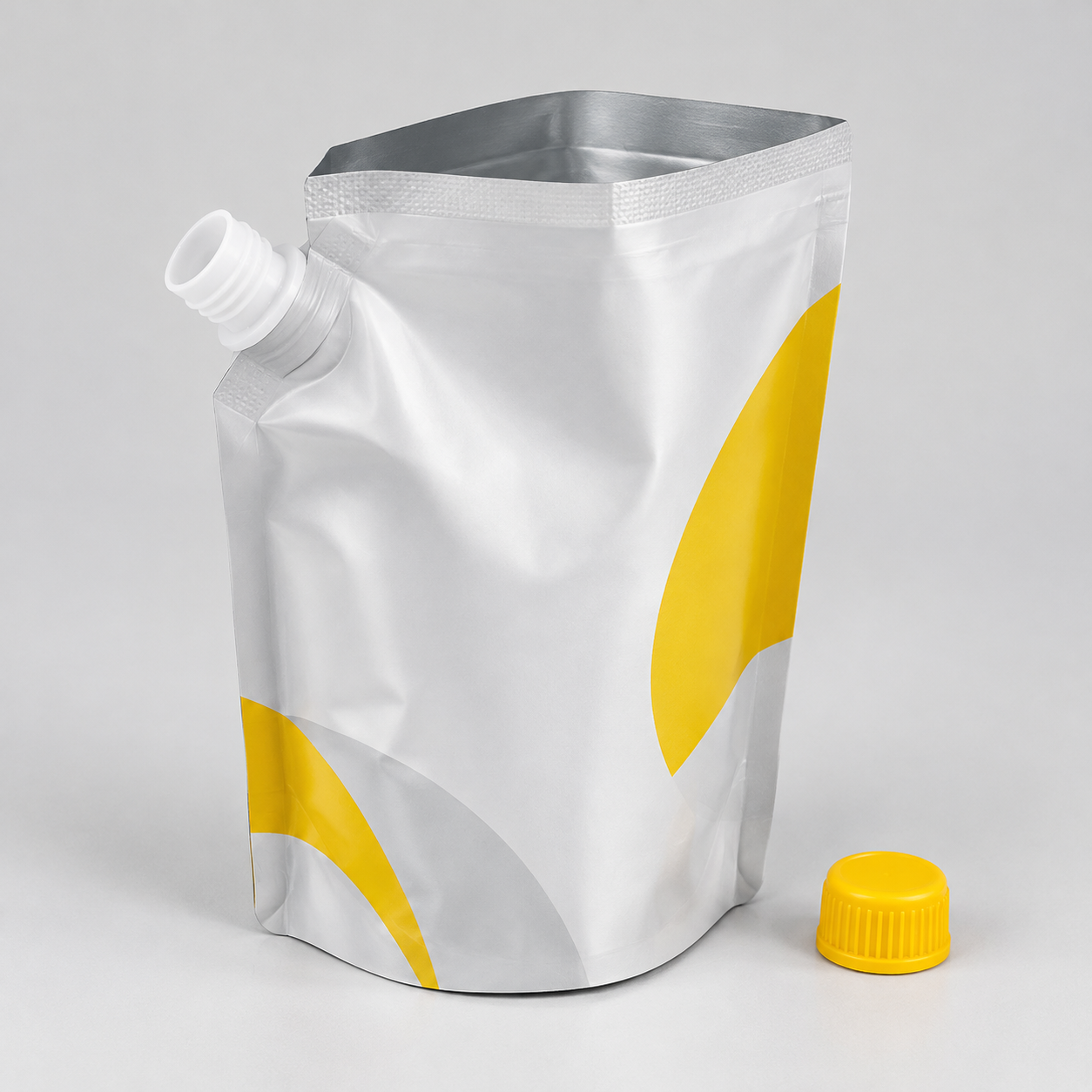
Record the product and line conditions before selecting a fitment or requesting a pouch quote. A useful specification includes fill weight or volume, product temperature at filling, target fill speed, headspace, viscosity, particle size, foam behavior, acidity or chemical composition where relevant, and storage and distribution conditions.
Viscosity should be described with its measurement temperature and, where relevant, shear condition. A product that pours easily at room temperature may behave differently when chilled or heated. Particulates should be described by maximum particle size and concentration, because the practical requirement is not only whether particles pass through a spout but whether they bridge at the neck or interfere with the cap seal.
Equipment details matter just as much. Confirm the nozzle outside diameter, required insertion depth, filling pressure, target cycles per minute, cap handling, cap torque range, top-seal tooling, pouch indexing method, and the space available around the fitment. Headspace is not simply unused volume: it can affect foaming, thermal expansion, vacuum formation, pouch shape, and closure contamination.
Viscosity, Particulates, Foam, and Seal Contamination
For a smooth sauce, fill-through-spout equipment may be practical when the product can pass through the selected opening without excessive pressure or air entrainment. For a product with fruit pieces, fibers, powders, or suspended solids, an open top may provide better access, but the final top seal must still be protected from particles.
Foam can cause underfill, unstable headspace, or product carryover into the closure area. The line may need a slower final fill, settling time, an anti-foam approach, or a different nozzle position. These are process decisions to verify with the actual formulation.
For reliable final sealing, keep the relevant internal seal layers, top edges, fitment weld area, cap sealing surfaces, and any gasket or liner interface free from product, foam, dust, and incompatible cleaning residue. The exact critical surfaces depend on the route. Liquid pouch seal contamination is not solved by choosing a different pouch shape alone; it requires a controlled filling and sealing method.
For household or chemical refills, do not transfer a food-packaging compatibility assumption to the chemical product. Confirm resistance to the formulation, surfactants, solvents, fragrances, and storage conditions through a separate compatibility assessment.
When Does the Process Require a Different Pouch Construction?
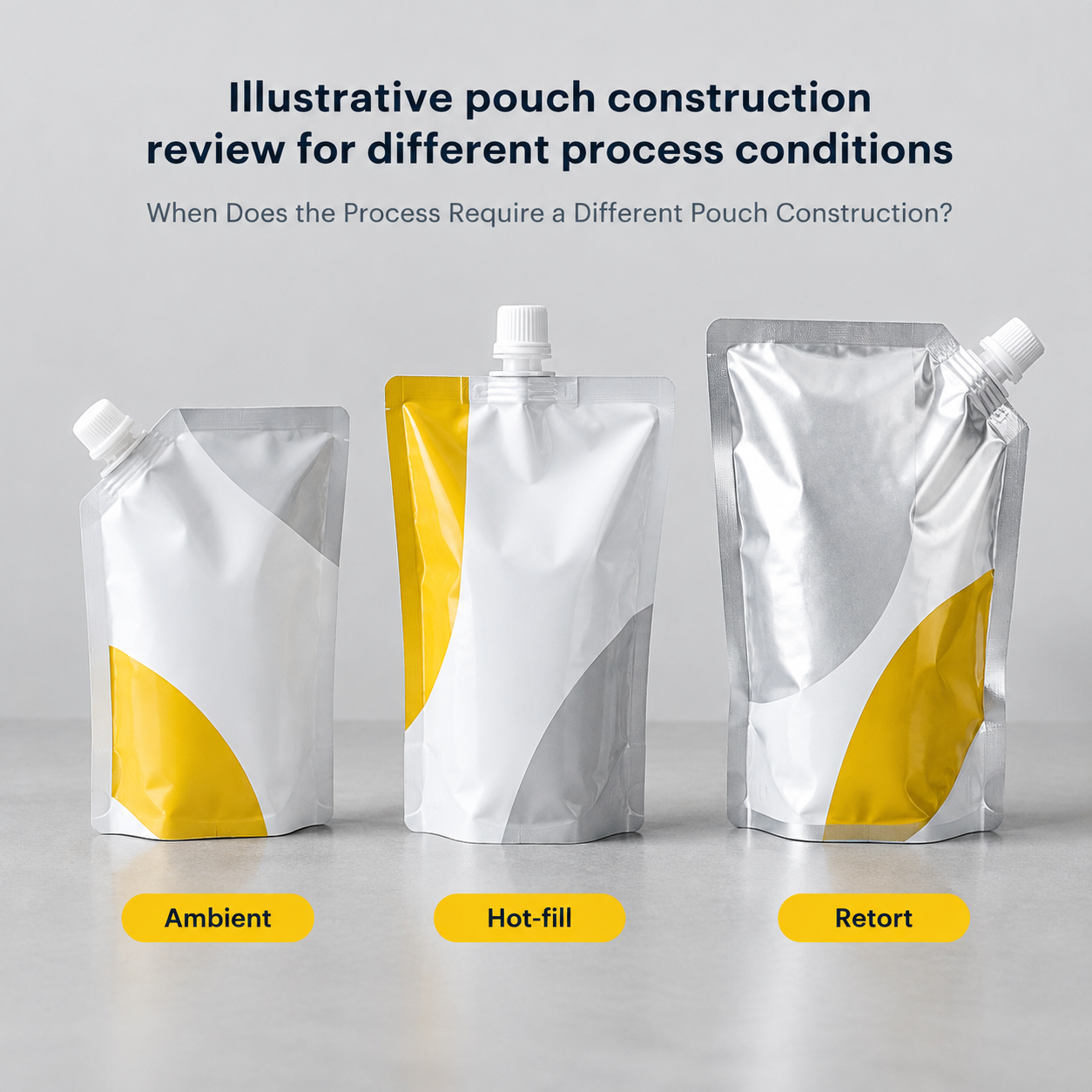
Do not assume that one spout pouch construction is suitable for ambient filling, hot filling, and retort. These are different application conditions with different thermal, mechanical, closure, and barrier requirements.
Ambient filling may use a construction selected for the product, expected shelf life, storage temperature, distribution handling, and closure requirements. The fitment weld, seal layer, cap, and laminate still need product-specific leakage and compatibility checks.
Hot filling exposes the pouch and fitment to an elevated product and package temperature. Hot-fill pouch validation should confirm dimensional stability, seal performance, fitment integrity, cap sealing, headspace behavior, cooling effects, and distribution handling under the intended process. No universal temperature or hold-time recipe applies to every product or construction.
Retort processing adds a defined thermal and pressure cycle after filling and sealing. The pouch body, sealant, fitment, cap, weld, and package geometry must be designed and validated for that cycle. A cleanroom classification or a food-contact document does not prove retort suitability, finished-pack sterility, or safe lethality. Review the specific retort pouch packaging requirements with the pouch and process teams.
For food applications, request declarations and supporting reports that apply to the actual construction and intended use. Do not treat food-contact documentation as blanket FDA approval of a factory. For chemical applications, request a separate formulation compatibility review. In both cases, the final pouch does not establish a shelf life by itself; shelf life depends on the product, package, process, storage, and validation evidence.
How to Approve the Pouch and Filling Route in Five Steps
Use the following sequence with the brand owner, contract packer, equipment supplier, and pouch manufacturer.
- Map the product and use conditions. Document formulation, fill volume, viscosity at the filling temperature, maximum particle size, foam behavior, acidity or chemical exposure, storage temperature, distribution hazards, and intended shelf-life target.
- Match the filling access to the line. Decide whether the nozzle should enter the spout or the open top. Confirm opening dimensions, nozzle clearance, filling pressure, target speed, headspace, cap handling, top-seal tooling, and changeover requirements.
- Specify the complete closure system. Approve the pouch geometry, sealant, fitment material and dimensions, weld design, cap or liner, top-seal width where applicable, and the relationship between the spout and the standing bottom gusset. Review the quality and inspection information as part of the supplier discussion, while keeping final process approval with the project team.
- Run representative trials. Fill production-intent samples on the intended equipment at the relevant product temperature and speed. Check fill accuracy, headspace, foam, seal contamination, cap application, torque where applicable, seal strength, fitment pull or weld integrity, leakage, and package appearance. For thermal applications, use the intended validated process and evaluate samples afterward.
- Approve documents and controls before ordering. Confirm the agreed drawing, fitment and cap specifications, construction, artwork, inspection criteria, sampling plan, packaging configuration, quantity per SKU, and retained-sample process. For food contact or chemical use, confirm the relevant declarations, reports, and compatibility evidence for the exact application.
QINPACK describes in-house printing, lamination, curing, pouch converting, fitment installation, laboratory inspection, and export packing. Those company-published capabilities can support a project discussion, but the approved filling route and finished-pack performance still depend on the specific pouch, product, line, and test conditions.
Frequently Asked Questions
The answers below summarize the main specification decisions. The approved result still depends on the actual formulation, equipment, pouch construction, and process conditions.
Conclusion: Specify the Filling Route Before Ordering
Fill-through-spout and open-top pouch filling are different process interfaces, not interchangeable supply labels. Select the route by matching product flow, particulates, foam, headspace, nozzle access, fitment and cap requirements, top-seal access, and the intended storage or thermal process. Approve the complete pouch and closure system through representative trials before committing to a production order.
Discuss Your Packaging Specification With QINPACK
Send the product type, fill weight or volume, pouch format and target dimensions, viscosity and particulate information, filling and storage conditions, equipment interface, spout and cap requirements, quantity per SKU, artwork requirements, and destination. QINPACK can discuss a suitable structure, closure, printing method, and project-specific factory quote. You can also ask about available samples or a dieline consultation; confirm sample contents, eligibility, freight charges, quote response, and production schedules with the team.
FAQ
What is the difference between fill-through-spout and open-top pouch filling?
Fill-through-spout filling sends the product through an installed fitment before the cap is applied or tightened. Open-top pouch filling sends the product through a temporary top opening, after which the pouch top is heat sealed. The two routes use different equipment interfaces and have different contamination and closure-validation responsibilities.
How do viscosity and particulates affect spout and filling-route selection?
Higher viscosity can require a larger opening, different nozzle geometry, lower filling speed, or additional pressure control. Particulates must be assessed by size and concentration because they can bridge at a narrow neck or interfere with a cap, while particles entering an open top can contaminate the top seal. Measure or describe viscosity at the relevant temperature and process conditions.
Which pouch surfaces must remain clean for reliable final sealing?
Keep the internal seal layers, top edges, fitment weld area, cap sealing surfaces, and any gasket or liner interface free from product, foam, dust, and incompatible residue. The critical surfaces vary by route. Open-top filling places particular emphasis on the top-seal zone, while fill-through-spout filling places particular emphasis on the neck, cap, and fitment sealing interfaces.
Can the same spout pouch construction be used for ambient filling, hot filling, and retort?
Not by default. Ambient filling, hot filling, and retort expose the pouch and closure system to different thermal, pressure, dimensional, and distribution conditions. The exact laminate, sealant, fitment, cap, weld, and process must be reviewed and validated for the intended application. A food-contact document or cleanroom classification does not prove retort suitability or finished-pack sterility.
What should a contract packer confirm before ordering custom spout pouches?
Confirm the product formulation, fill volume, viscosity and particulates, filling temperature, target speed, headspace, storage and distribution conditions, nozzle or open-top access, pouch dimensions, fitment and cap specifications, top-seal tooling, artwork, quantity per SKU, inspection criteria, and destination. The contract packer should participate in representative trials before the final specification is released.
Discuss Your Packaging Specification With QINPACK
Send your product type, fill weight or volume, pouch format and dimensions, viscosity and particulates, filling and storage conditions, equipment interface, spout and cap needs, quantity per SKU, artwork requirements, and destination. The QINPACK team can discuss a suitable structure, closure, printing method, and project-specific factory quote. Ask about available samples or a dieline consultation, and confirm sample contents, eligibility, freight charges, quote response, and production schedules with the team.
Have Questions About This Packaging Specification?
Send your required barrier barrier properties, filling temperature, or bag dimensions to our Guangzhou prepress engineering team for a formal technical consultation.